 Image 1 of 1
For those who have grasped the foundations of Julius Evola’s thought, this collection pushes further—into the sharper, more specialized, and often more controversial dimensions of his work.
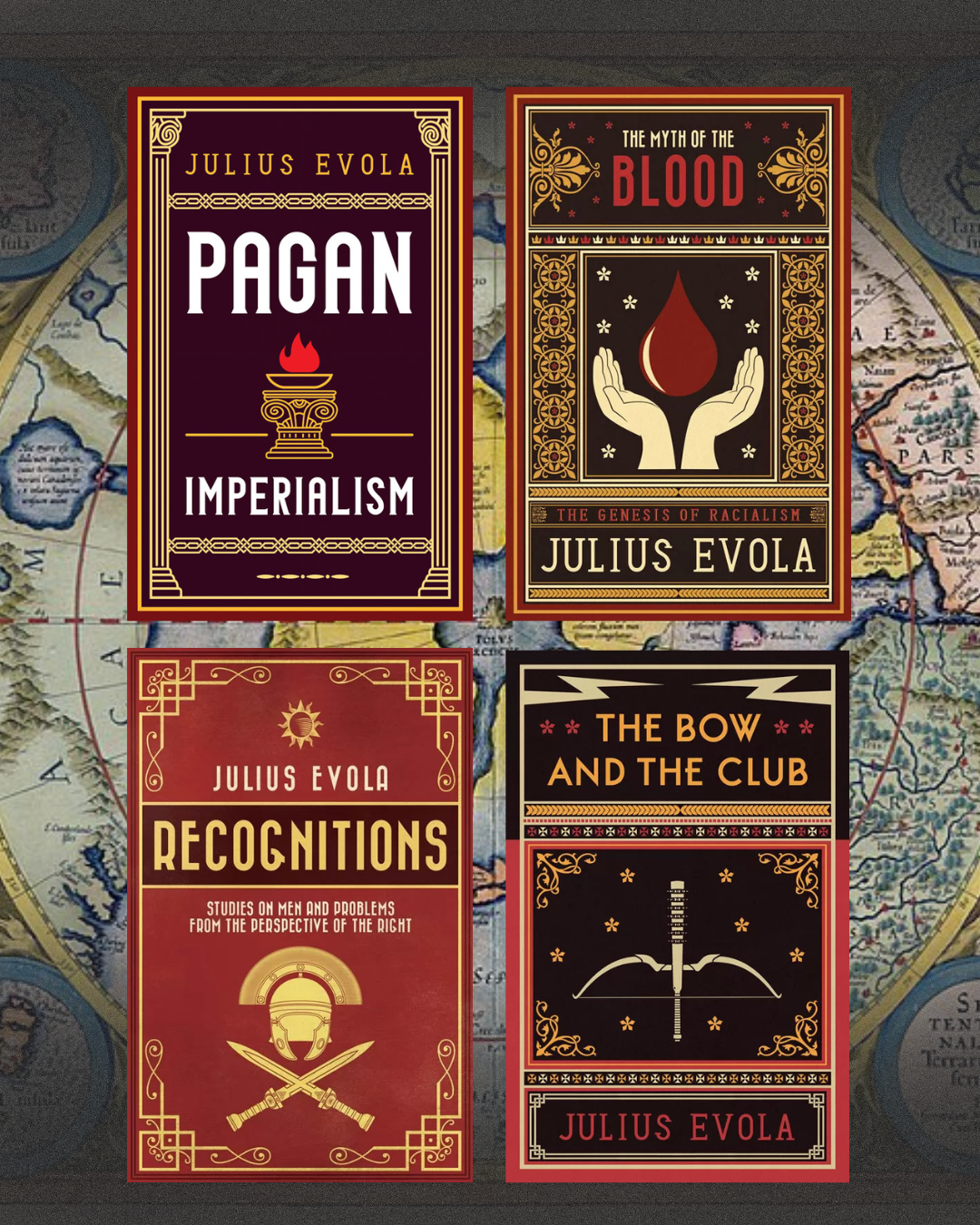
These writings move beyond broad philosophical frameworks and into direct cultural, political, and civilizational analysis. In Pagan Imperialism, Evola confronts the spiritual direction of the West and argues for a return to pre-Christian forms of authority and order. The Myth of the Blood explores questions of race, identity, and tradition from a perspective that rejects purely biological interpretations in favor of something deeper and more symbolic.
Recognitions offers a collection of essays spanning decades, revealing the continuity and evolution of Evola’s ideas across different contexts. Finally, The Bow and the Club presents some of his most direct and forceful cultural critiques—short, precise interventions aimed at the intellectual battles of his time.
Taken together, these works reveal a different side of Evola: less introductory, more confrontational, and deeply engaged with the ideological struggles of the modern world.
Format: All Paperback
For those who have grasped the foundations of Julius Evola’s thought, this collection pushes further—into the sharper, more specialized, and often more controversial dimensions of his work.
These writings move beyond broad philosophical frameworks and into direct cultural, political, and civilizational analysis. In Pagan Imperialism, Evola confronts the spiritual direction of the West and argues for a return to pre-Christian forms of authority and order. The Myth of the Blood explores questions of race, identity, and tradition from a perspective that rejects purely biological interpretations in favor of something deeper and more symbolic.
Recognitions offers a collection of essays spanning decades, revealing the continuity and evolution of Evola’s ideas across different contexts. Finally, The Bow and the Club presents some of his most direct and forceful cultural critiques—short, precise interventions aimed at the intellectual battles of his time.
Taken together, these works reveal a different side of Evola: less introductory, more confrontational, and deeply engaged with the ideological struggles of the modern world.
Format: All Paperback